How Felting Can Meet Your Emotional Needs
Posted on
How Felting Can Meet Your Emotional Needs


Welcome to the Heidifeathers Blog — your hub for needle felting tutorials, wet felting guides, for beginners and advanced makers. Explore armature techniques, colour blending, shaping methods, detail work, and finishing techniques designed to improve structure, texture, and precision in every felting project.
Each tutorial includes direct links to the exact felting materials, felting needles, wool fibres, and tools used, helping you learn, refine, and build confident, and competent felting results.
We’re here to guide your felting step by step, cheer on your makes, and encourage you to stretch your skills with supplies & techniques. Whatever you’re learning next, you’ll always have clear tutorials, practical tips, and steady support. xx
Posted on
Posted on
Keep Creating, Not Collecting: A Practical Tutorial for Moving Finished Pieces On

Felting thrives on curiosity. You begin with loose fibres, follow a spark of inspiration, and before long you’ve created something full of character. But when you make regularly, finished pieces can build up quickly. They fill shelves, baskets, and corners, and soon your creative space feels crowded. This tutorial shows how to keep felting freely by giving your finished pieces a purposeful life beyond your studio. Each section explains exactly why the approach works and how to put it into practice.
Posted on
Displaying Felted Work
If you’ve ever finished a felted piece and wondered how best to display it, you’re not alone. This guide walks you through straightforward solutions using frames, natural bases, and reclaimed objects.

All pictures from our customer gallery thank you for sharing.
Posted on
Wet Felting Texture Techniques: How to Create Ridges, Lumps and Contrast with Templates
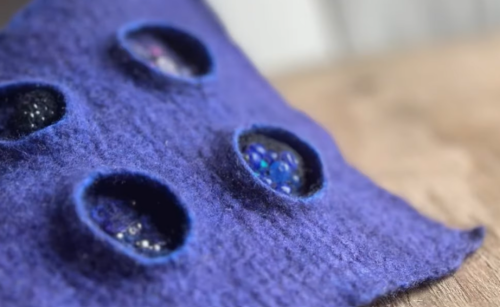
Pictures Muff Merino.
When you want to build strong surface texture in wet felting, the most important principle is controlled shrinkage. Wool naturally pulls inward as it felts, and a template lets you decide where that pull happens. By shaping the shrinkage, you create ridges, dips, raised areas, and contrasting surfaces without needing heavy sculpting.
Posted on
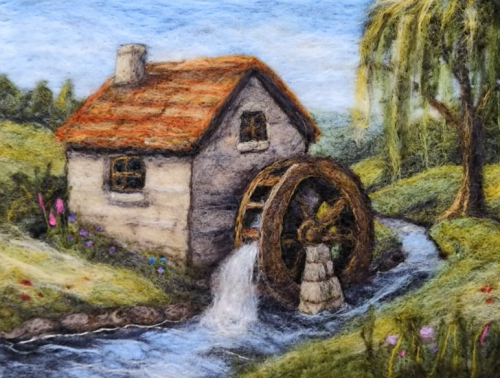
Image by Faelanda Fiber Art
When your 2D piece is fully shaped and the colours are in place, switch to a fine needle such as a 40 or 42 gauge. Work lightly over the surface, letting the needle skim just deep enough to catch the top fibres.